
In recent years, the global demand for gas transmission and distribution infrastructure has continued to grow steadily. Rapid urbanization, expansion of residential natural gas networks, industrial fuel conversion, and increasing investments in LNG and pipeline projects have all contributed to the rising consumption of gas pipes. Many developing regions are accelerating city gas distribution systems, while developed markets are upgrading aging pipeline networks to meet higher safety and environmental standards. Against this backdrop, the gas pipe industry is entering a new cycle of capacity expansion and technological upgrading.
The growth of the gas pipe market is not only reflected in new infrastructure projects but also in stricter technical requirements. Governments and regulatory bodies are emphasizing pipeline safety, corrosion resistance, pressure-bearing capacity, and long service life. As a result, manufacturers must improve welding precision, dimensional accuracy, coating quality, and inspection standards. Whether producing carbon steel pipes, stainless steel pipes, or specialized alloy pipes, modern gas pipe factories are facing increasing expectations in terms of automation, efficiency, and quality control.
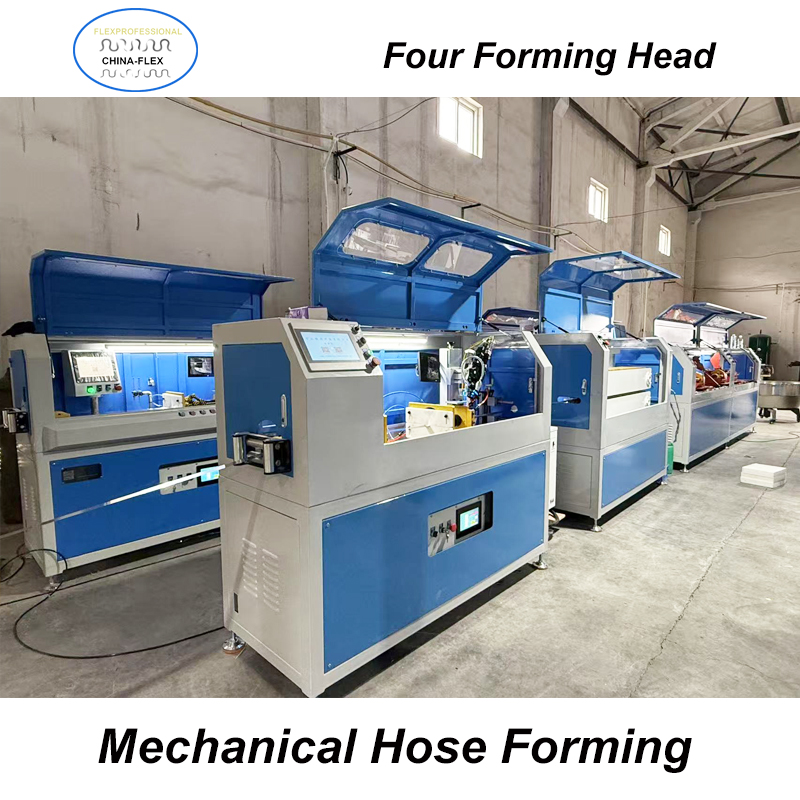
This market trend directly creates strong demand for advanced gas pipe manufacturing equipment. For pipe producers, investing in modern production lines is no longer optional—it is a strategic necessity. High-efficiency forming machines, precision welding systems, online NDT inspection units, hydrostatic testing systems, and automated coating lines allow manufacturers to improve productivity while ensuring consistent product quality. Compared with traditional semi-automatic production methods, automated pipe production lines significantly reduce labor dependency, minimize human error, and enhance output stability.
Another major advantage of investing in gas pipe manufacturing equipment lies in cost competitiveness. Energy infrastructure projects are typically large-scale and long-term. Pipe manufacturers capable of producing high volumes with stable quality gain stronger bargaining power in bidding processes. Efficient equipment reduces material waste, shortens production cycles, and lowers per-unit manufacturing costs. Over time, the return on investment becomes highly attractive, especially in regions where pipeline construction is expanding rapidly.
In addition, advanced equipment improves compliance with international standards such as API, ISO, and other pipeline certifications. Export-oriented pipe manufacturers must meet strict technical and documentation requirements. Modern production lines equipped with digital monitoring systems, traceability management, and automated data recording provide strong support for quality audits and third-party inspections. This capability opens access to higher-value international markets and large EPC projects.
Environmental and sustainability considerations also highlight the importance of upgrading gas pipe manufacturing equipment. New-generation machinery often features energy-efficient motors, optimized forming processes, and reduced emissions. As governments tighten environmental regulations, factories equipped with cleaner and smarter production systems gain a competitive edge. Sustainable production not only reduces operational costs but also strengthens corporate reputation in global markets.
Ultimately, the positive outlook of the gas pipe industry creates a powerful opportunity for equipment suppliers. Companies that provide complete, high-performance gas pipe production lines help manufacturers expand capacity, improve quality, and strengthen competitiveness. From pipe forming and welding to testing and coating, integrated solutions enable customers to build modern, future-ready factories.
As global energy demand continues to evolve and natural gas remains a key transitional energy source, the expansion and modernization of gas pipeline infrastructure will persist. Investing in advanced gas pipe manufacturing equipment is therefore not just a response to current market demand—it is a strategic move to secure long-term growth and sustainable development in the global energy supply chain.