
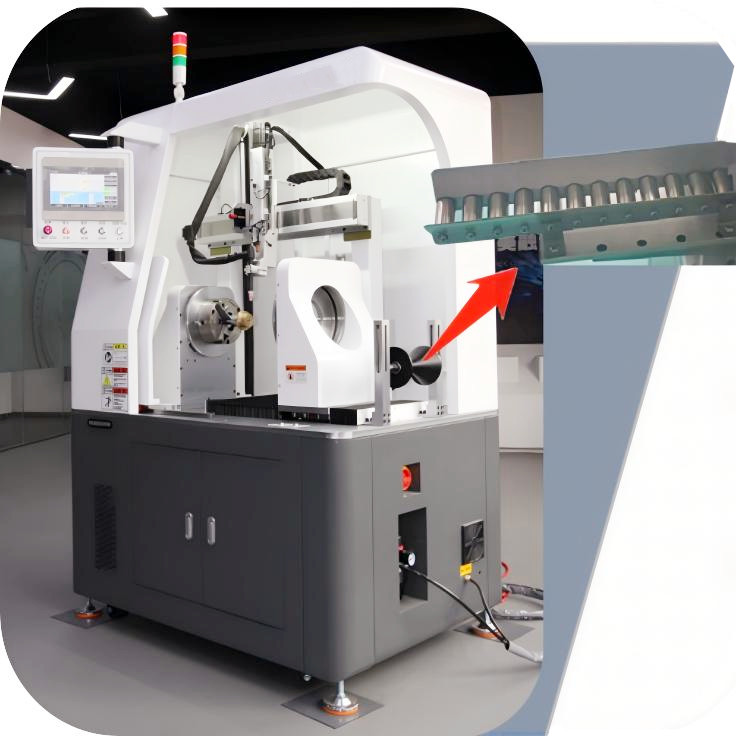
Stainless steel vacuum hose assemblies are used in semiconductor systems, laboratory equipment, coating machines, and other vacuum applications where leak tightness and cleanliness matter. In these systems, even one weak weld can affect vacuum integrity, process stability, and long-term reliability. For this reason, stainless steel vacuum hose welding requires careful control of preparation, purge, heat input, and inspection. Automatic orbital GTAW is widely used in critical, ultra-clean applications because it offers repeatability and tight control over current, travel speed, and shielding gas.
Why Welding Quality Matters for Stainless Steel Vacuum Hose
A vacuum hose must do more than connect two points. It must remain leak tight, resist vibration, and maintain cleanliness inside the system. If the weld is contaminated, misaligned, overheated, or poorly purged, the joint may show discoloration, oxidation, porosity, or unstable bead shape. In vacuum service, those problems can turn into leaks or performance loss. Helium leak testing is a core verification method for vacuum systems, and very small leaks are typically checked with a helium leak detector.
Select the Right Stainless Steel and End Connection
For many critical fluid and vacuum-related systems, 304L and 316L stainless steel are common material choices. Before welding begins, manufacturers should confirm that the hose material, braid, ferrule, and end fittings are compatible with the application and with each other. Good material selection makes the weld easier to control and helps support corrosion resistance and long-term sealing performance.
Clean the Hose Ends and Fittings Before Welding
Cleanliness is one of the most important steps in stainless steel vacuum hose welding. The workpieces, filler material if used, and even the tungsten and purge path should be kept free from oil, dust, oxide, and other contaminants. Official welding guidance notes that contamination on the workpieces, impurities in the gas supply, and poor gas handling can all contribute to weld defects and discoloration. Therefore, before welding, the hose end and fitting should be cleaned carefully and handled in a way that avoids recontamination.
Ensure Accurate Fit-Up and Alignment
A good weld starts with good fit-up. The hose end, ferrule, flange, or tube stub should be aligned correctly before the arc starts. If the joint is out of round, off-center, or poorly supported, weld quality becomes harder to control. In orbital welding guidance, joint preparation and controlled fixturing are emphasized because repeatability depends on holding the parts securely and keeping the weld path stable. For vacuum hose assemblies, this is especially important because the flexible section can move or distort more easily than rigid tube.
Use Proper Shielding and Purge Gas
Gas protection is critical when welding stainless steel for vacuum service. Swagelok’s orbital welding guidance notes that purge gas is typically argon, and that proper flow and pressure through and across the weld joint are among the most important procedural steps for successful welding. The same guidance also notes that wrong purge gas, insufficient shielding gas flow, gas contamination, or leaks in the gas lines can cause discoloration and quality problems. In practical terms, that means manufacturers should stabilize both OD shielding and ID purge before welding to reduce oxidation and protect the weld zone.
Control Heat Input During TIG or Orbital Welding
For most stainless steel vacuum hose assemblies, GTAW/TIG is preferred because it provides precise control and a clean weld bead. In critical applications, automatic orbital GTAW is often selected because it automates current, travel speed, arc gap, and gas flow, which helps improve consistency compared with manual welding. At the same time, excessive heat input can increase discoloration and distortion, while insufficient heat input can reduce penetration. That is why welding current, travel speed, arc gap, and gas control should be matched to the exact hose and fitting geometry.
Prevent Oxidation, Porosity, and Discoloration
A bright, controlled weld is usually a sign that purge and shielding were handled correctly. Guidance from ESAB and Swagelok both points to cleanliness and gas coverage as major factors in avoiding porosity and discoloration. If the weld turns heavily discolored, the first areas to check are shielding gas flow, purge gas type, gas-line leakage, contamination on the workpieces, and contamination in the weld head or purge path. Preventing these issues is especially important in vacuum applications, where surface condition and leak integrity both matter.
Inspect the Weld Visually Before Leak Testing
After welding, the joint should be checked for bead uniformity, excessive discoloration, undercut, misalignment, and any obvious surface defects. Visual inspection will not replace leak testing, but it helps identify process problems early and reduces wasted time in later stages. In high-quality vacuum hose manufacturing, visual inspection is usually combined with dimensional checks and leak verification.
Perform Helium Leak Testing for Vacuum Integrity
For vacuum hose assemblies, the welding job is not complete until leak tightness is verified. Vacuum industry guidance from Leybold states that for very small leaks below 1 × 10⁻⁶ mbar·l/s, helium leak detection is the credible method. Pfeiffer also describes helium spray testing as a standard method for vacuum-system commissioning, maintenance, and repair, with helium applied externally around likely leak zones such as welds, valves, seals, and flanges. For stainless steel vacuum hose assemblies, helium leak testing is therefore one of the most important final quality checks.
Build a Repeatable Welding Process
If you want better results in stainless steel vacuum hose welding, do not rely only on operator experience. Instead, build a repeatable process that includes material verification, cleaning, joint preparation, fixture control, purge management, parameter control, and final helium leak testing. Orbital welding systems are popular in critical applications because they support repeatability, data capture, and better control of major variables that affect weld quality. A stable process not only improves weld appearance, but also helps reduce leaks, rework, and customer complaints.
Conclusion
So, how do you weld the stainless steel vacuum hose properly? The key steps are simple in principle but demanding in practice: choose the right stainless steel and fittings, clean every part carefully, align the joint accurately, protect the weld with proper shielding and purge gas, control TIG heat input, inspect the weld, and verify the assembly with helium leak testing. When these steps are controlled well, the result is a cleaner weld, a more stable vacuum hose assembly, and more reliable leak-tight performance.